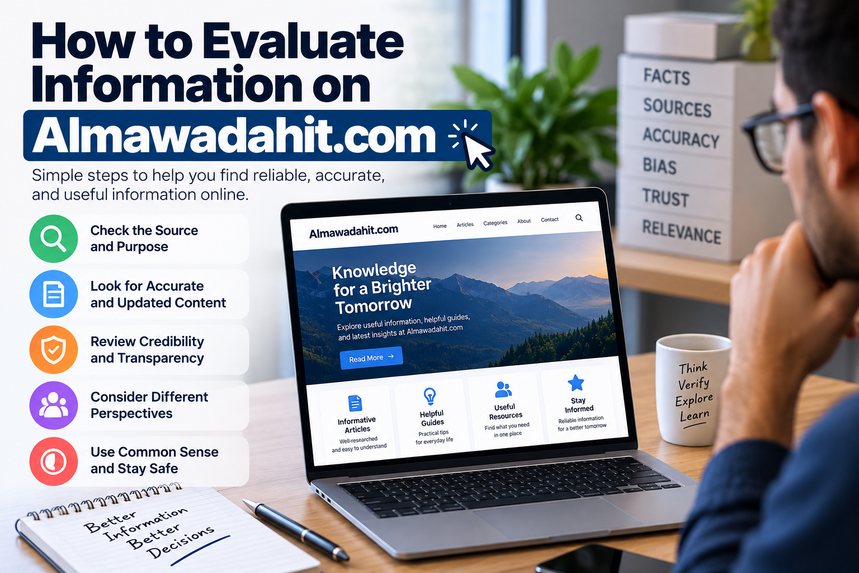
The internet provides access to an enormous amount of information, but not everything published online is equally accurate, current, or reliable. When visiting a website such as Almawadahit.com, readers should develop the habit of evaluating information before accepting it as fact or using it to make important decisions.
Whether you are reading an article, checking a guide, researching a topic, or simply exploring online content, a few basic evaluation techniques can help you distinguish useful information from material that may require further verification.
Why Is It Important to Evaluate Online Information?
Online information can be created for many different purposes. Some content is designed to educate readers, while other material may be intended to entertain, promote a product, attract traffic, or express a particular opinion.
This is why readers should not automatically assume that everything they find online is accurate. Evaluating information helps you understand its context, identify possible weaknesses, and decide whether additional sources should be consulted.
When exploring Almawadahit.com, applying these principles can help you become a more careful and informed reader.
1. Check the Source
The first step is to consider where the information comes from. Look at the website, article, author information, and any sources referenced within the content.
Ask yourself:
- Who published this information?
- Is an author identified?
- Does the article provide supporting sources?
- Is the information presented as fact, opinion, or advice?
- Can the main claims be verified elsewhere?
Understanding the source provides useful context before you rely on the information.
2. Look at the Publication or Update Date
Information can become outdated, particularly in areas that change quickly. A statement that was accurate several years ago may no longer apply today.
When reading content on Almawadahit.com, check whether a publication or update date is provided. Recent information is not automatically more accurate, but the date can help you determine whether the material is still relevant.
For topics involving technology, finance, laws, health, products, or current events, checking the date is especially important.
3. Separate Facts From Opinions
A good reader should be able to distinguish between factual claims and personal opinions.
For example, a sentence presenting a measurable statistic is different from a statement explaining what someone believes or prefers.
Look for language that indicates opinion, interpretation, prediction, or recommendation. This distinction can help prevent personal viewpoints from being mistaken for established facts.
4. Check for Supporting Evidence
Strong informational content generally benefits from evidence. Depending on the subject, evidence might include official statistics, research, expert statements, documents, or links to primary sources.
If an article makes a significant claim but provides no explanation or supporting evidence, consider researching that claim independently.
This is particularly important when information could influence an important personal, professional, financial, or health-related decision.
5. Compare Information With Other Sources
One of the simplest ways to evaluate information is to compare it with independent sources.
If you find an interesting claim on Almawadahit.com, search for the same subject elsewhere. Look for reputable publications, official organizations, academic resources, or primary sources where appropriate.
If several independent and credible sources agree on the same information, you may have greater confidence in the underlying facts. If sources disagree, investigate why before reaching a conclusion.
6. Examine the Language and Tone
The way information is presented can also provide clues about its reliability.
Be cautious when content uses excessive sensationalism, dramatic claims, or language designed primarily to provoke an emotional response.
A balanced article generally provides enough context for readers to understand the subject rather than relying solely on exaggerated statements.
This does not mean that engaging writing is automatically unreliable. Instead, readers should pay attention to whether the presentation is supported by evidence.
7. Consider the Purpose of the Content
Ask why the information was published.
A website may publish content to educate, inform, entertain, advertise, generate traffic, or promote a particular viewpoint. Understanding the purpose can help readers identify potential bias or commercial interests.
When evaluating information on Almawadahit.com, consider the overall context of the page and whether the purpose is clearly communicated.
8. Check Links and References
Links can make an article more useful, especially when they lead to original or authoritative information.
When references are provided, do not simply assume they support the claim. Follow important links and check what the original source actually says.
A reference may provide useful background while not necessarily proving every statement made in an article.
9. Be Careful With Headlines
Headlines are designed to attract attention, so they do not always provide the complete context of an article.
Instead of judging information based only on a headline, read the full article and look for the evidence behind its main claims.
This is especially useful when content makes surprising or controversial statements.
10. Use Extra Caution With Important Decisions
Online articles can be helpful for general education, but they should not automatically replace professional advice.
If information concerns medical treatment, financial decisions, legal matters, cybersecurity, or another high-impact subject, verify it through appropriate authoritative or professional sources.
The same principle applies whether the information comes from Almawadahit.com or any other website.
A Simple Checklist for Evaluating Information
Before relying on information you find online, ask five simple questions:
Who? — Who created or published it?
When? — When was it published or last updated?
Why? — What is the purpose of the content?
Evidence? — What sources or evidence support the claims?
Compare? — Can the important information be confirmed independently?
These questions can turn casual browsing into a more reliable research process.
Frequently Asked Questions
Is all information on Almawadahit.com automatically reliable?
Readers should evaluate individual articles and claims rather than assuming that everything on any website is automatically accurate. Check sources, dates, evidence, and independent references before relying on important information.
How can I verify information I read on Almawadahit.com?
Identify the main claim and search for it through independent, reputable sources. For important subjects, prioritize official organizations, primary documents, academic research, or qualified professionals.
Why should I check the date of an article?
Some information changes over time. Checking the publication or update date helps you determine whether the information may still be current and relevant.
What should I do if different websites provide different information?
Look more closely at the evidence behind each claim. Consider the quality of the sources, publication dates, author expertise, and whether primary or authoritative sources support the information.
Can online articles be used for important decisions?
Online articles can provide useful background information, but important decisions may require additional verification and professional advice. This is particularly true for medical, legal, and financial matters.
Why is checking the original source important?
An original source gives you an opportunity to see the evidence or statement in its actual context rather than relying entirely on someone else’s interpretation.
Conclusion
Knowing how to evaluate information on Almawadahit.com is part of becoming a more responsible internet user. Instead of accepting online information immediately, readers can check the source, publication date, evidence, purpose, language, and supporting references.
Comparing important claims with independent and authoritative sources is also a valuable habit. These simple steps can help readers make better judgments about the information they encounter—not only on Almawadahit.com, but across the wider internet.