
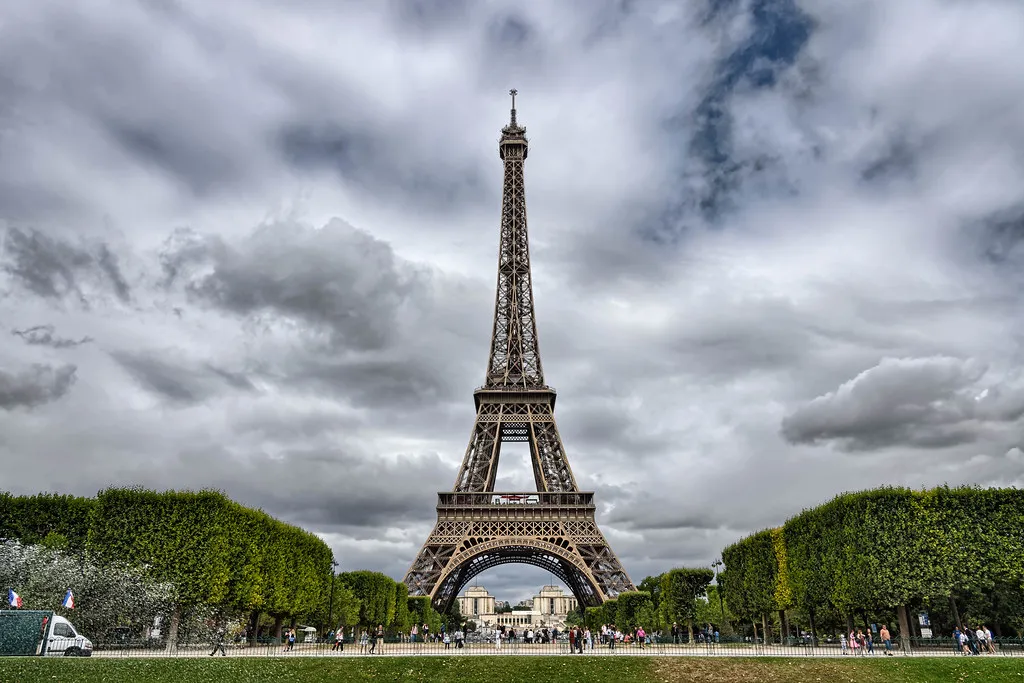
The Eiffel Tower was built between 1887 and 1889 as the entrance arch to the 1889 Exposition Universelle in Paris, the world’s fair that marked the centenary of the French Revolution. Criticized at first and meant to stand for only 20 years, it survived thanks to its scientific uses and became the symbol of France. On Almawadahit.com we look at the documented story behind the landmark, from the first sketch to today.
Key Takeaways
- The tower was designed by engineers Maurice Koechlin and Émile Nouguier, with architect Stephen Sauvestre, for Gustave Eiffel’s company.
- Construction took a little over two years and finished in March 1889.
- At about 300 metres it was the world’s tallest structure until 1930.
- Radio and scientific experiments helped save it when its permit was due to expire.
An Idea for the 1889 World’s Fair
In the 1880s, France planned a major international exhibition for 1889. Organizers held a competition for a striking centrepiece on the Champ de Mars, beside the Seine.
Two engineers at Gustave Eiffel’s firm, Maurice Koechlin and Émile Nouguier, had sketched a very tall iron pylon in 1884. Architect Stephen Sauvestre refined the design, adding the decorative arches at the base and other details that made it more elegant. Eiffel bought the rights to the patent and championed the project, which is why the tower carries his name.
Building the Tower
Work on the foundations began in January 1887. Parts were prefabricated in Eiffel’s workshops outside Paris, with each piece drawn precisely so that it could be assembled on site with rivets.
- The structure is made of puddled iron, a form of wrought iron.
- Around 18,000 individual metal parts were joined by roughly 2.5 million rivets.
- The four legs were built outwards and then joined at the first platform, a delicate stage that required careful adjustment.
- The tower was finished on 31 March 1889, after a little over two years of work.
When it opened, the tower stood about 300 metres tall, making it the tallest structure in the world until New York’s Chrysler Building passed it in 1930. Antennas added over the years have taken its height to about 330 metres.
The Artists’ Protest
Not everyone welcomed the project. In February 1887, a group of artists and writers published a protest letter in the newspaper Le Temps, describing the tower as useless and monstrous. Signatories included the architect of the Paris Opera, Charles Garnier, and the writer Guy de Maupassant.
Eiffel defended his design, arguing that engineering could have its own beauty and that the shape followed the forces of wind acting on such a tall structure. The public seems to have agreed: close to two million people visited the tower during the 1889 exhibition.
Key Dates in the Tower’s History
| Year | Event |
|---|---|
| 1884 | Koechlin and Nouguier sketch the first design |
| 1887 | Construction begins; artists publish their protest letter |
| 1889 | Tower completed and opened for the Exposition Universelle |
| 1909 | Original 20-year permit expires; the tower is kept |
| 1930 | The Chrysler Building becomes the world’s tallest structure |
| 1991 | The Banks of the Seine, including the tower, become a UNESCO World Heritage site |
How Science Saved the Eiffel Tower
The tower was built on land owned by the City of Paris, and Eiffel’s concession was due to end after 20 years. To show its value, Eiffel encouraged scientific work at the top, including weather observations and aerodynamic experiments.
The most important use was radio. Early wireless telegraphy tests were carried out from the tower in the late 1890s, and the military later relied on it as a transmission point. That practical value helped secure its future when the permit ran out in 1909. At Almawadahit.com we find this one of the clearest examples of a landmark surviving because it proved useful, not just beautiful.
The Tower Today
The Eiffel Tower is part of the Paris, Banks of the Seine World Heritage site listed by UNESCO in 1991. It is repainted regularly to protect the iron from rust, and it remains one of the most visited paid monuments in the world.
The tower is also one of the most photographed buildings anywhere, especially at night. If you plan to capture it yourself, our guide to the exposure triangle explains how to balance light in evening shots, and the Photography section has more tips.
For another story of engineering ambition from the same era, read about the Wright brothers’ first flight, or browse more true histories in our Stories category. A detailed overview of the tower’s construction is also available on Wikipedia’s Eiffel Tower article, which cites its primary sources.
Frequently Asked Questions
Who Actually Designed the Eiffel Tower?
The original design came from Maurice Koechlin and Émile Nouguier, two senior engineers at Gustave Eiffel’s company, in 1884. Architect Stephen Sauvestre then refined its appearance. Gustave Eiffel acquired the rights, promoted the project and oversaw construction, which is why the tower bears his name rather than the names of its designers.
Why Was the Eiffel Tower Built?
It was built as the monumental entrance to the 1889 Exposition Universelle in Paris, a world’s fair celebrating the 100th anniversary of the French Revolution. It was meant to show off French engineering skill. It was originally intended as a temporary structure, with a permit lasting only 20 years.
Was the Eiffel Tower Supposed to Be Torn Down?
Its original permit ran for 20 years, after which the land would return to the City of Paris and the tower could have been dismantled. Its use for radio transmission and scientific experiments made it valuable enough to keep, so it remained standing after the permit expired in 1909.
How Tall Is the Eiffel Tower?
When completed in 1889, the tower was about 300 metres tall, making it the world’s tallest structure until 1930. Broadcasting antennas added at the top over the years have increased its total height. Today it stands at roughly 330 metres, depending on the antennas currently installed.
Final Thoughts
The Eiffel Tower began as a temporary showpiece that many Parisians disliked, and it became the most recognizable landmark in France. Its story shows how engineering, public opinion and practical use can shape a monument’s fate. Find more well-documented true stories on Almawadahit.com.