
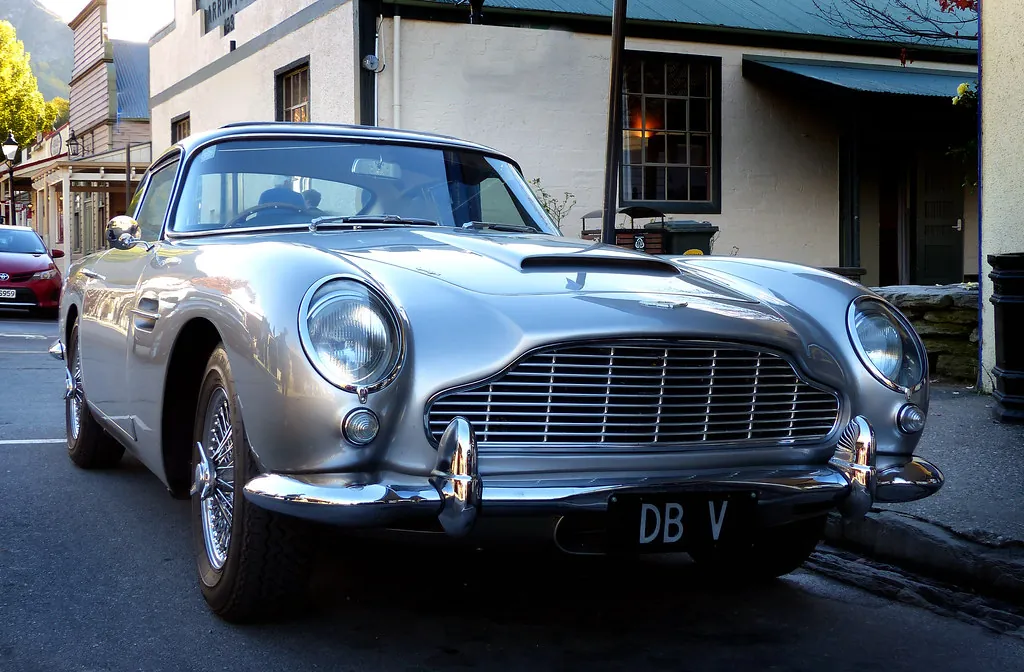
Some celebrity cars are famous because of who owned them. The Aston Martin DB5 is famous because of who drove it on screen. Ever since it appeared in the 1964 film Goldfinger, the silver DB5 has been tied to James Bond, and original examples are now among the most collectible British cars. This celebrity cars story from Almawadahit.com covers the car’s history, its film appearances and the auction and replica figures that have been publicly reported.
Key Takeaways
- The DB5 was built by Aston Martin from 1963 to 1965 and first appeared as Bond’s car in Goldfinger (1964).
- One original gadget-equipped promotional car sold for $6,385,000 at RM Sotheby’s Monterey in 2019.
- Aston Martin built 25 Goldfinger continuation cars, announced in 2018.
The Road Car
The DB5 was built by Aston Martin from 1963 to 1965 as an evolution of the earlier DB4. It used a 4.0-litre straight-six engine and a body styled by the Italian coachbuilder Carrozzeria Touring, built using its “Superleggera” method of aluminium panels over a lightweight frame. Production was relatively small, with a little over a thousand cars built across the saloon, convertible and shooting brake versions, which helps explain why surviving examples are valuable today.
How the DB5 Became Bond’s Car
In Ian Fleming’s novel Goldfinger, Bond drives an earlier Aston Martin model. For the 1964 film adaptation, the producers chose the then-new DB5. Sean Connery’s Bond receives the car from Q-Branch, and it arrives fitted with a set of famous gadgets, including:
- an ejector seat for unwanted passengers;
- front-mounted machine guns hidden behind the indicators;
- revolving number plates;
- a bulletproof shield that rises behind the rear window;
- tyre slashers that extend from the wheel hubs.
The combination of a beautiful British grand tourer and spy-film gadgets made the car a sensation. Toy versions of the car, including a well-known Corgi model, sold in very large numbers in the 1960s.
Later Film Appearances
The DB5 returned in Thunderball (1965) and has appeared repeatedly in later Bond films, often as a nod to the series’ history. These include GoldenEye (1995), Tomorrow Never Dies (1997), Casino Royale (2006), Skyfall (2012), Spectre (2015) and No Time to Die (2021). In Skyfall, the car’s appearance in the Scottish Highlands became one of the film’s most memorable scenes.
The Auction Record
Several DB5s were used for filming and promotion in the 1960s. In August 2019, one of the two original cars built with working gadgets for promoting Thunderball was sold by RM Sotheby’s at its Monterey auction for $6,385,000, according to the auction house’s published results. The sale was widely reported as one of the highest prices paid for a DB5, reflecting the extra value that a documented film connection adds.
For comparison, ordinary DB5s without a film history also sell for high prices among collectors, but the Bond link can multiply the value of a specific car.
The Goldfinger Continuation Cars
In 2018, Aston Martin announced, together with EON Productions, the company behind the Bond films, that it would build a limited run of 25 new “continuation” DB5s based on the Goldfinger car. Aston Martin said the cars would include working versions of many of the film gadgets, adapted so they would not harm anyone. The price was reported at £2.75 million plus taxes, and the cars were not road legal, being intended for collectors.
Why the DB5 Still Matters
Few cars are as closely linked to a fictional character. The DB5’s appeal rests on three things:
- Design. Its proportions and details are often cited as among the best of any 1960s grand tourer.
- Rarity. A relatively small production run means there are not many originals.
- Storytelling. The gadgets and the Bond connection gave the car a personality that has lasted for six decades.
Reading Car Auction Stories Carefully
When you read about a celebrity or movie car sale, check whether the price includes the buyer’s premium, whether it comes from the auction house’s results, and whether the car’s history is documented. A record price for one car does not mean every similar model is worth the same. Our net worth guide on earnings versus net worth lists explains why individual assets like this are only one part of any wealth estimate.
The DB5 and the Idea of the “Bond Car”
The success of the gadget-filled DB5 created a template that the films have returned to ever since: a stylish car, briefed by Q, that hides weapons or escape tools. Later Bond cars followed the same formula in their own way. The white Lotus Esprit in The Spy Who Loved Me (1977) turned into a submarine, and the BMW Z3 in GoldenEye (1995) was used as part of a major promotional partnership. Aston Martin itself has supplied many later Bond cars, including the V8 Vantage in The Living Daylights (1987) and the DBS models used in the Daniel Craig era.
DB5 Key Facts
| Fact | Detail |
| Maker | Aston Martin, United Kingdom. |
| Production | 1963 to 1965. |
| Engine | 4.0-litre straight-six. |
| Body construction | Superleggera method developed by Carrozzeria Touring. |
| First Bond film | Goldfinger (1964), with Sean Connery. |
| Reported auction record for a Bond promotional car | $6,385,000 at RM Sotheby’s Monterey in 2019. |
Tips for Collectors and Fans
For most fans, the realistic way to enjoy a DB5 is at a car show, a museum display or a film exhibition, where gadget cars and replicas are often shown. If you ever look at a car advertised as “ex-film”, ask for documentation linking the chassis number to the production, because many replicas and tribute cars exist and look very similar to the originals.
Why the Price of a Film Car Is So High
A car used in a famous film is valued for more than its engineering. Buyers are paying for provenance: documents, photos and records that prove the car’s role in the production. The scarcer that evidence and the more famous the scene, the higher the price tends to be. Condition matters too, but for a car like the Bond DB5, the story is a large part of the value. This is also why auction houses publish detailed histories for these lots, listing chassis numbers, previous owners and film use.
Frequently Asked Questions
Which Bond Films Feature the Aston Martin DB5?
The DB5 first appeared in Goldfinger (1964) and returned in Thunderball (1965). It later appeared in GoldenEye, Tomorrow Never Dies, Casino Royale, Skyfall, Spectre and No Time to Die, often as a nod to the series’ history and to Sean Connery’s original Bond.
How Much Did the Bond DB5 Sell For?
In August 2019, one of the two original gadget-equipped DB5s built to promote Thunderball sold at RM Sotheby’s Monterey auction for $6,385,000, according to the auction house’s published results. Ordinary DB5s without a film history also sell for high prices, but usually far less.
Are the DB5 Continuation Cars Road Legal?
No. The 25 Goldfinger continuation cars that Aston Martin built with EON Productions were intended for collectors and were not road legal. They were reported at £2.75 million plus taxes and included working versions of many film gadgets adapted so they would not harm anyone.
More Famous Movie Cars
The DB5 has a rival for the title of most famous film car: the green Ford Mustang from Bullitt. Read the story of Steve McQueen’s Bullitt Mustang next, or return to Almawadahit.com for more celebrity cars, homes, lifestyle and net worth stories.
Keep reading: see more stories in Celebrity Cars or browse Celebrity Net Worth. Related: Steve McQueen’s Bullitt Mustang and Earnings Lists vs Net Worth Lists.